Science
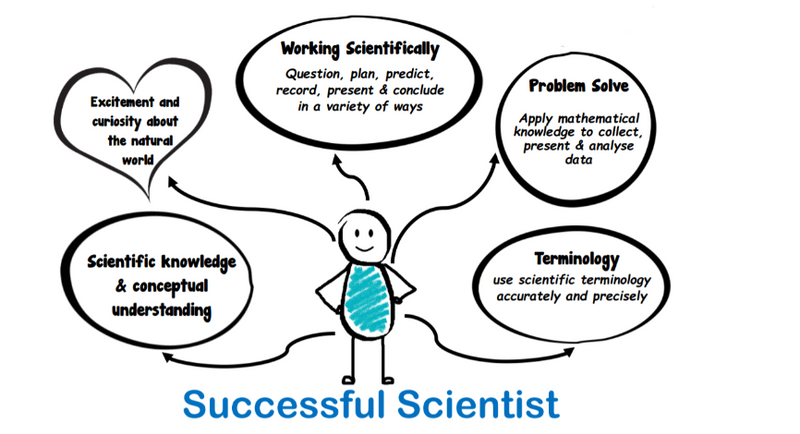
At Lowerhouses CE Primary School, our science curriculum provides children with the foundations to understand the world around them. We want all pupils to experience a curriculum that inspires curiosity, develops critical thinking skills, and fosters a passion for scientific exploration.
Through the Early Years curriculum and the KS1 and KS2 National Curriculum for science, we ensure children gain a deep understanding of biology, chemistry, and physics, while learning to question, investigate, and develop an interest in the world around them.
To support progression and make learning clear, each topic page now includes a Learning Journey. These journeys show how knowledge and skills build step by step across year groups, helping children, parents, and staff see the pathway of scientific understanding from EYFS through to Year 6.
Science Learning Journey
🔬 Intent
- Inspire curiosity and a love of science.
- Develop critical thinking and problem‑solving skills.
- Ensure children understand essential knowledge, methods, processes, and uses of science.
- Build a foundation in biology, chemistry, and physics.
- Encourage questioning and investigation of the world around them.
⚙️ Implementation
- Pupils are taught how science explains phenomena, predicts outcomes, and analyses causes.
- Scientific enquiry skills are developed through observing, predicting, interpreting results, communicating, questioning, and hypothesising.
- Children are introduced to fair testing and often combine mathematical skills with scientific ones to identify trends and patterns.
- Recording of scientific work is age‑appropriate:
- Drawings/diagrams in Key Stage 1.
- Full experiment write‑ups, including graphs, tables, observations, and conclusions, by the end of Key Stage 2.
- Each half‑term’s work includes at least one investigation to promote Scientific Enquiry.
🎯 Impact
- Formative assessment is embedded in lessons through questioning, marking, observation, and challenge.
- At the end of each unit, teachers record outcomes and address misconceptions or gaps in learning.
- This ensures the curriculum meets the needs of all learners and supports progression across year groups.
🧰 Science Resources for Parents
| 📖 Category | 🌐 Resource | 📝 Description | 🔗 Link |
|---|---|---|---|
| Curriculum Support | STEM Learning – Parents & Families | Free resources, activities, and guidance to support science learning at home. | https://www.stem.org.uk/parents-families |
| Explorify | Free science activities and discussion prompts designed for primary school children. | https://explorify.uk | |
| Practical Activities | BBC Bitesize – Primary Science | Interactive lessons, videos, and practice activities for KS1 and KS2. | https://www.bbc.co.uk/bitesize/subjects/z2pfb9q |
| Science Sparks | Hands‑on experiments and investigations for children to try at home. | https://www.science-sparks.com | |
| General Support | Oxford Owl – Science for Parents | Tips and resources to help parents support science learning. | https://home.oxfordowl.co.uk/science |
| National Geographic Kids | Fun facts, videos, and activities to inspire curiosity about the natural world. | https://www.natgeokids.com |